A detailed three-day city break with official castle prices, airport fares, named rain alternatives, Scottish food and realistic walking choices.

An Edinburgh autumn break that still works when it rains
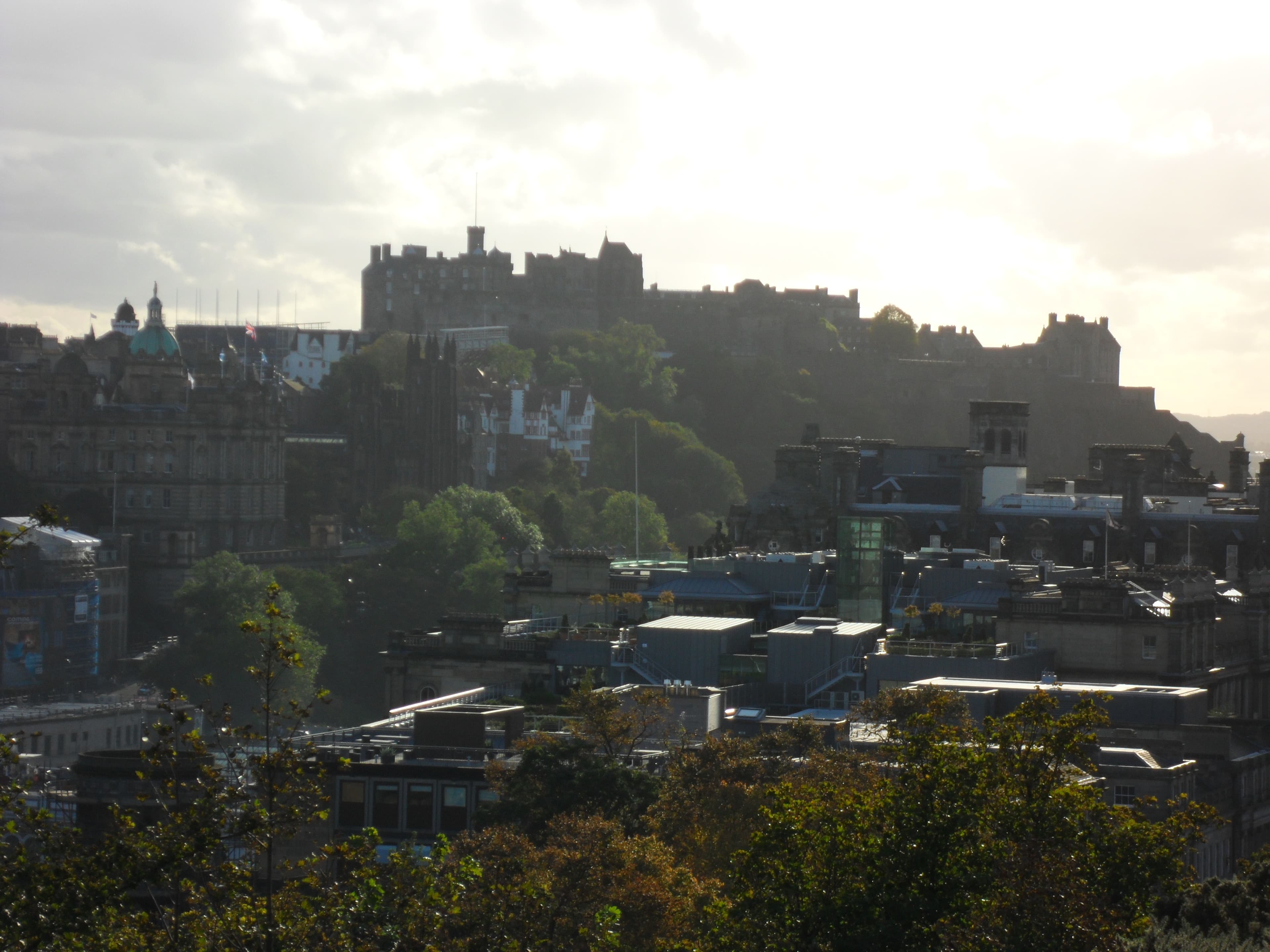
Edinburgh can deliver a satisfying three-day trip without a rental car, a procession of costly tours or a determination to climb every hill regardless of the weather. The useful combination is a properly planned castle morning, a slow walk down the Old Town, substantial free museums and galleries, and a shorter riverside outing through Dean Village and Stockbridge. Add a clear-weather viewpoint when conditions suit it. This gives you both the dramatic skyline and somewhere worthwhile to go when the skyline disappears into cloud.
Autumn changes the practical rhythm. From October, the castle's normal closing time moves to 17:00, with last entry at 16:00. Most major free galleries and the National Museum of Scotland close at 17:00 too. Putting all the outdoor walking first and leaving museums until late afternoon therefore wastes your best indoor options. Plan one anchor visit in the morning, lunch at a sensible hour and an afternoon that can move between inside and outside.
The route below assumes three usable days in the city. A flight arriving late on Friday and leaving early on Sunday creates one full day, not three. With less time, keep the castle, a focused Old Town walk and the museum; remove the longer western neighbourhood circuit. The suggested durations are editorial estimates with pauses, not guarantees of queue length or weather. All prices are in pounds sterling, with the type of ticket made explicit where online and walk-up costs differ.
Airport arrival and getting around without overbuying tickets
The airport tram is a straightforward option for central accommodation near its stops. The official online ticket shop lists an adult airport single at £7.50 and an open return at £9.25. Those are the online products checked for this guide; do not assume every machine or purchase channel offers an identical fare. An open return can be considerably better value than two online singles, but read its validity and redemption conditions before buying. Choose the stop that suits your hotel rather than automatically travelling to the far end of the line.
The open-return conditions allow the return on any day and apply only to Edinburgh Trams; show the ticket on your phone or in print to onboard staff. A useful alternative for a tram-focused stay is the £20 adult three-day tram product, which combines an airport return with unlimited city-zone tram travel on three pre-selected days. It excludes buses. That distinction matters if your hotel or western walking route needs a bus connection.
Allow a generous arrival window for immigration where applicable, baggage, ticket use and the final walk. If the hotel is in the Old Town, a short map distance from Princes Street can include a steep climb or steps. Look at the actual street-level route while choosing accommodation. Travelling with luggage through a busy railway station or up a cobbled lane feels very different from the same walk with a small day bag.
For city travel, the operator's fare change effective 22 February 2026 lists an adult city single at £2.40 and a city DAYticket at £6. The tram FAQ explains that the city day product covers trams between Newhaven and Ingliston Park & Ride and relevant Lothian day services, but not the airport stop. The airport fare boundary is the important distinction: a city ticket does not become an airport ticket simply because you remain on the same vehicle.
For this itinerary, you may walk most of the first two days and need a day ticket only for the western or northern extension. Compare the intended journeys before buying one each morning. Use the current operator journey planner for buses and diversions. If using contactless payment, follow the operator's rules consistently rather than alternating cards and devices and assuming they will be recognised as one customer. A car adds parking and access decisions without helping the principal city route.
Choose a base that matches your evening and your mobility
| Area | Why stay there | Practical compromise |
|---|---|---|
| Old Town, around the Royal Mile | Atmospheric early walks and easy access to the first day's sights | Cobbles, gradients, possible nightlife noise and historic stairs |
| New Town, near Princes Street or St Andrew Square | Convenient tram access, galleries and city connections | The castle and parts of the Old Town still involve climbing |
| West End or Haymarket | A useful transport base and a good starting point for Dean Village | A longer walk to the lower Royal Mile; check late-evening connections |
| Stockbridge or Leith | A neighbourhood-focused stay with cafés and a different local rhythm | More deliberate transport planning for the core Old Town visits |
For a first visit, central New Town accommodation offers a practical balance. Old Town accommodation is a good choice when atmosphere matters and the terrain suits you. Leith is rewarding if its restaurants and waterfront are part of your plan, but choosing it solely because a listing looks central on a zoomed-out map can create extra daily travel. Check your room's orientation, lift access from pavement level and luggage arrangements. “Historic building” can be charming and still inconvenient with a pushchair or heavy suitcase.
A live hotel price for your dates is more meaningful than a generic average. Compare the final total, cancellation terms and any breakfast or local charges. An autumn weekend is not automatically quiet or inexpensive, and school holidays can affect visitor numbers. A well-located room with reliable sleep may be a better saving than a cheaper room that creates two unnecessary journeys every day.
Day one: give Edinburgh Castle a proper morning
09:30–12:30: book the official entry, then choose your highlights
Book through Edinburgh Castle's official ticket page. Adult admission for ages 16–64 is £23.50 online, compared with £26 at the gate; children aged 7–15 are £11.50 online. Online booking secures entry when the selected slot is available, whereas a sold-out day is not solved by arriving at the ticket office. Leave luggage at your accommodation: the access guidance prohibits suitcases and large rucksacks of 30 litres or more, and the castle cannot store visitors' belongings.
For an October visit, the normal schedule is 09:30–17:00, last entry 16:00. Reserve at least two hours; this guide allows closer to three for a more comfortable first visit. The castle is a steep, exposed complex, not a single indoor palace. Wear shoes with grip and carry a waterproof layer you can use while moving between buildings. Adverse weather can close the site, so preserve a little flexibility around this major paid visit.
Start by orienting yourself on the official map, then make Crown Square and the main historic interiors the focus. The Honours of Scotland are the crown, sceptre and sword of state, displayed in the Crown Room. They connect the fortress to Scotland's monarchy rather than merely providing something glittering to photograph. Give the interpretation time, and expect a popular compact viewing area to move more slowly than an open courtyard.
The Great Hall and St Margaret's Chapel give contrasting experiences. The hall conveys ceremonial scale, while the chapel is a much smaller and older space. The castle's history places the Great Hall's completion in 1511 and explains the royal associations of the palace. Combine those stops with a look at Mons Meg and selected views over the city. Choose a handful of meaningful places rather than spending the whole visit racing between every numbered point on the map.
If you want structured interpretation, an ordinary admission ticket and a guided-tour product are not the same purchase. The official guided-tour page lists a £6.50 tour element and specified autumn departures; confirm the total package when booking. Alternatively, the ticket page offers a £4 audio guide for use with your own phone and headphones. Decide whether you want that assistance before entering, and download what you need rather than spending the first half-hour resolving mobile data.
13:00: the gun is optional, and Sunday is different
The One o'Clock Gun fires at 13:00 except Sundays, Good Friday and Christmas Day. If it matters to you, choose an arrival time that leaves room to explore beforehand and ask staff where to stand. It is a sudden loud report, so consider hearing protection for children or anyone sensitive to noise. Do not plan an entire Sunday visit around a firing that will not take place.
Accessibility also affects timing. The castle access guide describes steep cobbles and a mobility vehicle to Crown Square on request; that vehicle cannot run between 12:15 and 13:15 because of the gun. Contact the site about your particular equipment and route needs before booking. Some interiors and routes have steps even when assistance gets you to the upper level. The useful question is which spaces you can reach comfortably, not whether the site can be described with a single accessible or inaccessible label.
Day one afternoon: descend through the Old Town
After lunch, walk down from Castlehill along the upper Royal Mile, allowing time to notice the closes and the changing street width. You do not need to enter every paid attraction on the way. A short, carefully chosen side lane can reveal more about the Old Town's layered layout than another souvenir shop. Respect private entrances and residential courtyards; a picturesque doorway is not an invitation to explore someone's building.
Make a detour toward Victoria Street and Grassmarket if you want the curved shopfronts and a view back toward the castle from below. Allow 45–60 minutes with pauses, remembering that returning uphill requires more effort than descending. Victoria Street is a functioning street with shops and traffic arrangements, not a film set reserved for visitors. For a lower-walking version, stay on the Royal Mile and shorten the side loop rather than climbing repeatedly between levels.
Continue as far down the Royal Mile as your energy and weather allow. The lower section toward Canongate gives a different impression from the castle end. If a palace interior is your priority, the Palace of Holyroodhouse needs its own date-specific availability and admission check: royal use and seasonal opening arrangements can alter access. It is not included in the priced core here, and squeezing a second major ticketed site into the last hour of the afternoon is not the recommended plan.
Finish with a meal near your accommodation or a reserved restaurant rather than carrying on until you are too tired to enjoy dinner. A ghost tour can be an optional evening activity if you enjoy that style of storytelling, but check walking distance, steps, age guidance and the meeting point before purchase. The Old Town's atmosphere can also be enjoyed through an ordinary early-evening walk without adding another commercial experience.
Day two: a museum with a plan, then art and a weather window
10:00–12:30: National Museum of Scotland
The National Museum of Scotland on Chambers Street is free for general entry and normally opens daily 10:00–17:00; some special exhibitions charge. It is substantial enough to be a main attraction, not just a place to wait for a shower to pass. Start with a map and select two or three areas. A first visit that alternates Scottish history with a different subject is more memorable than trying to cover every floor in a single sweep.
The museum's gallery guide helps you choose between Scottish history, natural sciences, world cultures and science and technology. Use those interests to give the morning a purpose: an adult interested in objects and national history can make a different route from a family whose children want animals and mechanisms. The central hall is worth appreciating as architecture too. Build a seated pause into a two-hour visit instead of assuming that indoor sightseeing does not tire your legs.
A timely extra is the free Scotland's First Warriors display, listed from 27 June 2026 to 16 May 2027, exploring conflict in prehistoric Scotland. For visits during 12–16 October, the museum also lists free half-term storytelling activities, with individual workshops carrying their own age and booking details. These are date-specific options, not promises for every autumn weekend. Check the event's own listing before rearranging your day around it.
14:00–15:30: National Gallery, with a manageable focus
After lunch, cross toward the National at the Mound. National Galleries of Scotland lists its principal Edinburgh galleries as open daily 10:00–17:00 with free general admission; special exhibitions may charge. Give the National around 90 minutes, concentrating on the Scottish collection or a small selection of other rooms that interests you. This makes an enjoyable second cultural stop without requiring an entire afternoon of museum stamina.
The Scottish galleries provide a particularly relevant counterpart to the morning's objects and history. Instead of looking for a checklist of famous names, notice how landscape, people and national identity are represented in the works on view. The gallery's position also makes it easy to combine with a short Princes Street Gardens walk when conditions improve. Do not buy an exhibition ticket on the assumption that all rooms require one; distinguish the free collection from the selected paid show.
Late afternoon: Calton Hill only when conditions suit
In a clear, reasonably calm weather window, continue east toward Waterloo Place and Calton Hill for a skyline view. Allow 45–60 minutes for the ascent, a circuit near the monuments and descent, plus the walk from the gallery. This is a shorter viewpoint outing than a full Arthur's Seat walk, but it still includes climbing and exposure. Choose a comfortable daylight slot rather than waiting for a dramatic sunset that leaves you descending in poor conditions.
If wind or rain makes the hill unattractive, replace it with the Portrait gallery on Queen Street, another named free option in the National Galleries network, and go before its 17:00 closing. That substitution needs to happen early enough to be useful: a decision at 16:50 is too late for a proper visit. Keeping the museum and gallery sequence flexible is what makes this itinerary work in autumn without spending every wet hour in an unnamed café.
Day three: Dean Village, the Water of Leith and Stockbridge
09:30–12:00: a short riverside walk, not the whole trail
Begin from the West End and approach Dean Village by a suitable street route, taking particular care on the descent around Bell's Brae. The village's appeal lies in the river setting and the contrast with the formal central streets. Allow 30–45 minutes to look from public paths and bridges. The buildings are homes: keep voices down, do not enter private stairs or courtyards for photographs, and leave enough space for residents and other path users.
Continue along the available Water of Leith route toward Stockbridge, allowing about an hour with pauses rather than treating a short segment as a fitness target. The Water of Leith Conservation Trust provides the route map and current closure information. It describes the overall walkway as only partly wheelchair-accessible. A closure elsewhere on the river should not prompt you to improvise through private grounds, and wet leaves or high water can make a normally pleasant path unsuitable for your group.
At Stockbridge, stop for lunch and spend some time on the neighbourhood streets. Circus Lane is a brief side visit for its small-scale streetscape, not a destination that needs an hour of photographing front doors. This part of the trip works best at an ordinary pace: river, lunch, shops or a café, then one considered afternoon choice. It gives the city a lived-in dimension after two days of major institutions.
14:00–16:00: choose art or a longer neighbourhood afternoon
If modern art is a priority, arrange the western route around Modern One and Modern Two on Belford Road rather than adding them as a last-minute detour from the far side of town. The National Galleries visitor page lists daily 10:00–17:00 opening and free general access, with some exhibitions charged. Modern One makes a clear indoor replacement when the river walk is wet. Allocate 90 minutes to two hours and use transport back if you have already walked enough.
Alternatively, remain around Stockbridge for a slower afternoon, then return to the centre with enough time to collect luggage. If your flight is later that day, calculate the airport journey from the actual departure point and add the airport's required arrival time. The low cost of a final attraction is irrelevant if it forces an expensive or stressful rush to your flight. Do not schedule the final riverside walk so tightly that a path diversion becomes a missed connection.
Arthur's Seat: an alternative for walkers, not an extra obligation
If a longer hill walk is a main reason for coming, replace the western neighbourhood morning with Holyrood Park rather than adding a summit after everything else. Historic Environment Scotland's park information is the starting point for current visitor guidance. Arthur's Seat is an exposed hill with uneven terrain; choose a suitable signed route, allow roughly two to three hours for a first-time out-and-back with pauses, and adapt to your fitness and conditions. That is a planning allowance, not a guaranteed walking time.
Use footwear with grip, a waterproof and a clear daylight margin. In strong wind, poor visibility or heavy rain, use the museum-and-gallery plan instead. Do not follow an old online route onto a closed path: the operator's Radical Road update explains the continuing safety issue beneath Salisbury Crags. The city view is not worth ignoring barriers. Families with young children or anyone needing an easy paved outing should choose a shorter suitable park visit rather than assuming a famous city hill is a casual promenade.
Scottish food and a useful named meal option
Look for a meal that fits the weather and the day, not an obligation to taste every Scottish speciality in one sitting. Haggis with neeps and tatties, a warming soup, smoked fish or a seasonal casserole can make a satisfying lunch after a windy morning. VisitScotland's food guide explains the traditional dishes and local produce. Cullen skink, made with smoked fish and potatoes, is a useful choice if you prefer a bowl of soup to a large meat main.
For a concrete restaurant that fits the Calton Hill side of the route, Howies Waterloo Place at 29 Waterloo Place publishes a two-course lunch offer at £19.95. It also lists a two-course early-dining offer at £25.95 Sunday–Thursday, between 17:15 and 18:30. Menu choices and supplements need checking when booking, and drinks or service are not assumed included. This is a named current offer, not a claim that every Edinburgh restaurant serves a two-course meal at that price.
Two lunches at the stated base offer would be £39.90 before extras. That is a useful planning reference for a couple comparing a restaurant lunch with a more elaborate dinner. Reserve if the venue matters to you, especially around a fixed castle or evening booking. Vegetarian haggis and other alternatives can make traditional-style dining possible, but ask about ingredients and allergens; an appealing dish name is not a substitute for the kitchen's answer. Whisky is an optional interest, and alcohol-free visitors can enjoy the same food and city route without a tasting package.
A three-day budget built from confirmed fares
| One adult | Price used | Condition |
|---|---|---|
| Airport tram open return | £9.25 | Official online product checked for this guide |
| Three city DAYtickets | £18.00 | Three £6 tickets; airport excluded |
| Edinburgh Castle | £23.50 | Online adult admission, age 16–64 |
| National Museum and general gallery collections | £0 | Special exhibitions and extras excluded |
| Transport and core admission subtotal | £50.75 | No accommodation, meals or flights |
If you need only one city day ticket, the same subtotal becomes £38.75. Add the optional £4 phone audio guide if you want it at the castle, and add meals using actual menu choices. A £19.95 base lunch offer takes the three-day-ticket example to £70.70 before drinks, supplements, service, other food and lodging. These are transparent components, not a complete daily holiday budget or a promise of a hotel rate.
For two adults and one child, do not triple the adult total: castle age categories and transport child products need separate selection. Conversely, free general museum entry does not mean that every workshop or temporary exhibition is free. The chief advantage of this plan is that several substantial cultural experiences have no ordinary admission charge, leaving room in the budget for one major paid visit and a meal you actually want.
What to pack, and the mistakes that waste a short stay
Bring grip-soled shoes, a waterproof jacket, a warm layer and a small bag that meets attraction restrictions. A compact umbrella can help on sheltered streets but is less useful in hilltop wind. Keep your phone charged for tickets and navigation, and save the hotel address and key bookings somewhere available offline. Leave time to dry wet clothing before repacking it for a flight.
The most expensive mistake is buying several overlapping tours before deciding what you want from the city. The most tiring is treating the Old Town as flat. The most avoidable is reaching a free museum just before 17:00 and discovering that your entire rain plan has closed. Give indoor attractions proper daytime blocks, place viewpoints in weather windows and use transport when it preserves energy for the experience itself.
With children, choose a short museum focus, a food break and a manageable outdoor goal. For sensory needs, the castle provides visual stories and sensory resources through its access guide; plan around the gun's loud report. For wheelchair access, confirm individual routes and facilities with each venue, particularly the castle and river path. A three-day break can remain rich even when you remove the summit, the narrow closes or a difficult ascent.
Frequently asked questions
Is Edinburgh still worthwhile in wet autumn weather? Yes. The National Museum and major gallery collections are substantial free attractions, provided you visit during their daytime opening hours.
Do I need to book the castle? Book a suitable official online slot in advance. A sold-out day may have no walk-up admission available.
Does a city DAYticket cover the airport tram? No. The city product stops short of the airport fare zone; the budget includes a separate airport open return.
Can I hear the One o'Clock Gun on Sunday? The official schedule excludes Sunday, Good Friday and Christmas Day.
Should I climb Arthur's Seat on a first visit? Only if walking and the conditions suit you. Replace another half-day with it; the castle and museums already make a complete city break.
Can I bring luggage into the castle before my flight? Suitcases and large rucksacks are prohibited and storage is not provided. Arrange hotel or other suitable storage before the visit.
Research notes
Practical details checked on 11 October 2026 using the official institutions and transport operators linked throughout. Online products, base restaurant offers and ordinary admission prices are distinguished from extras. Walking times, neighbourhood comparisons and day sequencing are editorial suggestions. Reconfirm your travel date for unexpected closures, severe weather, temporary exhibitions and ticket conditions.